10 Slab Leak Warning Signs—and How We Find the Right Repair
An unexplained water bill, a warm patch of flooring, or moisture along a baseboard can be the first clue that something is leaking. The difficult part is figuring out where the water is coming from.
A slab leak involves plumbing beneath or within a home’s concrete foundation. Because the piping is concealed, the place where water becomes visible may not identify the actual failure point.
At Rodgers Air Conditioning & Plumbing, we investigate the plumbing before recommending a repair. We serve homeowners in French Valley, Murrieta, Menifee, and Temecula, and rerouting is the approach we use most often for slab-leak repairs when the home’s layout allows it.
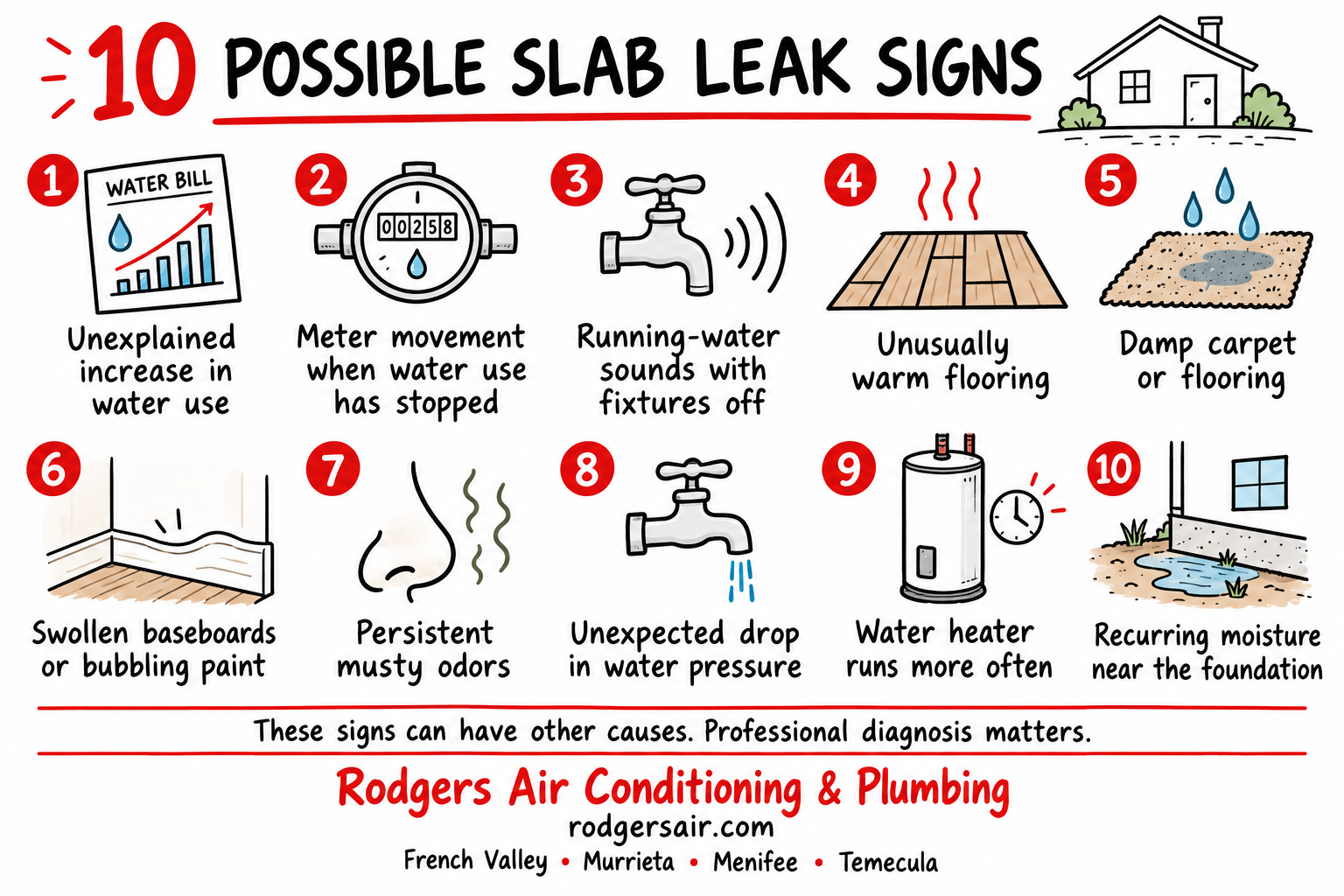
These ten signs can help you recognize a potential problem. None, by itself, proves that you have a slab leak.
10 Signs Worth Investigating
1. Your water usage increases without an explanation
Compare the amount of water used on your bills, rather than looking only at the dollar total. A higher bill can reflect changes in rates, irrigation, household activity, or a leak.
If your water consumption has increased while your habits have stayed about the same, start checking for an explanation. Toilets, irrigation, and accessible plumbing should be considered along with concealed water lines.
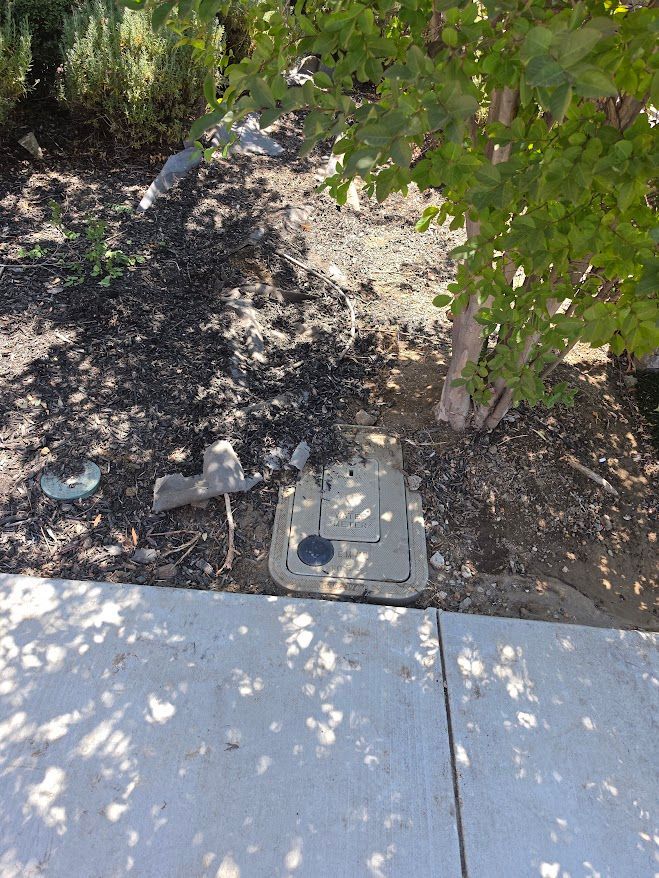
2. The water meter registers flow when nothing should be using water
A meter that continues registering water use can help reveal a leak you cannot see.
First, account for equipment that uses water automatically, including irrigation, ice makers, and water softeners. Toilets can also leak quietly.
Meter movement tells you water is passing through the meter. It does not tell you that the water is escaping beneath the slab.
3. You hear water running when fixtures are off
An unexplained hissing or running-water sound near a wall, floor, or plumbing connection deserves attention.
Note where you hear it and whether it continues after normal water use has stopped. A running toilet or appliance may explain the sound, but persistent water noise without an obvious source is worth investigating.
4. A section of flooring feels unusually warm
A leaking hot-water line can create a warm area in the floor.
Pay attention to warmth that is new, persistent, or difficult to explain. Sunlight, heating systems, and normal hot-water piping can also affect floor temperature.
The warmest spot is a clue to investigate; it is not automatically the place where concrete should be opened.
5. Carpet or flooring stays damp
Recurring moisture is worth checking even when there is no large puddle.
Before assuming the water is coming from beneath the slab, consider nearby appliances, fixtures, supply connections, and other possible sources. Note whether the moisture appears during a particular activity or returns when nothing nearby is being used.
6. Baseboards swell or paint begins to bubble near the floor
Water damage may first appear at the bottom of a wall. Swollen trim, peeling paint, or soft drywall can indicate that moisture is reaching materials that should remain dry.
The plumbing source may be inside the wall, beneath the floor, or somewhere nearby. The visible damage helps direct the investigation but does not establish the source.
7. A room develops a persistent musty smell
A musty odor can be a reason to investigate hidden moisture, especially when accompanied by damp flooring or damaged trim.
Smell alone does not confirm a slab leak or determine the extent of a mold problem. Find and address the moisture source. EPA recommends drying wet materials within 24–48 hours to help prevent mold growth. EPA moisture guidance
8. Water pressure drops unexpectedly
A significant leak can affect the pressure available at fixtures, but low pressure has several possible causes.
A pressure regulator, partially closed valve, restricted fixture, or supply issue may also be involved. Tell your plumber whether the change affects one fixture, the whole house, hot water, or cold water. Those details help narrow the investigation.
9. Your water heater runs more often or hot water becomes less reliable
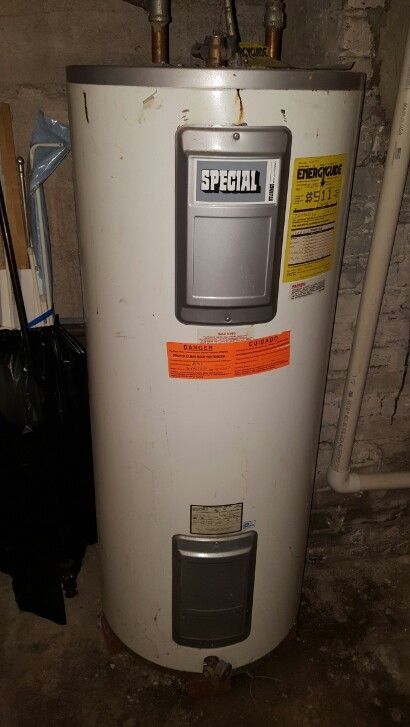
A hot-water leak can cause the heater to replace water and heat that are continually being lost.
However, changes in hot-water performance can also come from the heater itself or increased household demand. When those changes occur alongside meter movement, warm flooring, or unexplained water noise, the hot-water piping deserves closer attention.
10. Moisture repeatedly appears near the foundation
Persistent wet areas along the outside of the home can indicate a plumbing problem, but irrigation, drainage, and weather can produce similar conditions.
Note where the moisture appears and whether it changes with sprinkler use or rainfall. An outdoor wet spot does not automatically establish that a pipe beneath the house is leaking.
A Simple Water-Meter Check
If you suspect an unexplained leak and there is no active flooding requiring immediate attention, checking the meter can provide useful information:
- Make sure no one is using water and account for automatic water-using equipment.
- Record or photograph the meter reading.
- Check it again after a period without water use.
Eastern Municipal Water District recommends comparing readings over a two-hour period when no water is being used. A change can indicate a leak that needs further investigation. EMWD’s leak-checking guidance
You do not need to wait through this test if water is actively damaging the home.
Also, closing the house shutoff and seeing the meter stop does not establish a slab leak. That can narrow the area being investigated, but it does not identify which fixture or pipe is responsible.
How We Investigate a Suspected Slab Leak
Our first objective is to determine what is actually leaking.
Depending on the symptoms and plumbing layout, we may inspect accessible connections, isolate portions of the system, evaluate hot- and cold-water lines, pressure test, listen for water movement, or use thermal imaging where it can help.
Thermal imaging shows surface-temperature differences. It provides clues rather than a direct view of a broken pipe beneath concrete. FLIR’s explanation of thermal leak detection
For a potential reroute, identifying the affected line and understanding where it begins and ends are especially important. That information helps us determine whether we can replace the leaking run through an alternative path.
Our slab-leak detection and repair service page explains the options we evaluate.
Why We Usually Look at Rerouting
When a buried water line fails, we usually evaluate whether rerouting that line is practical.
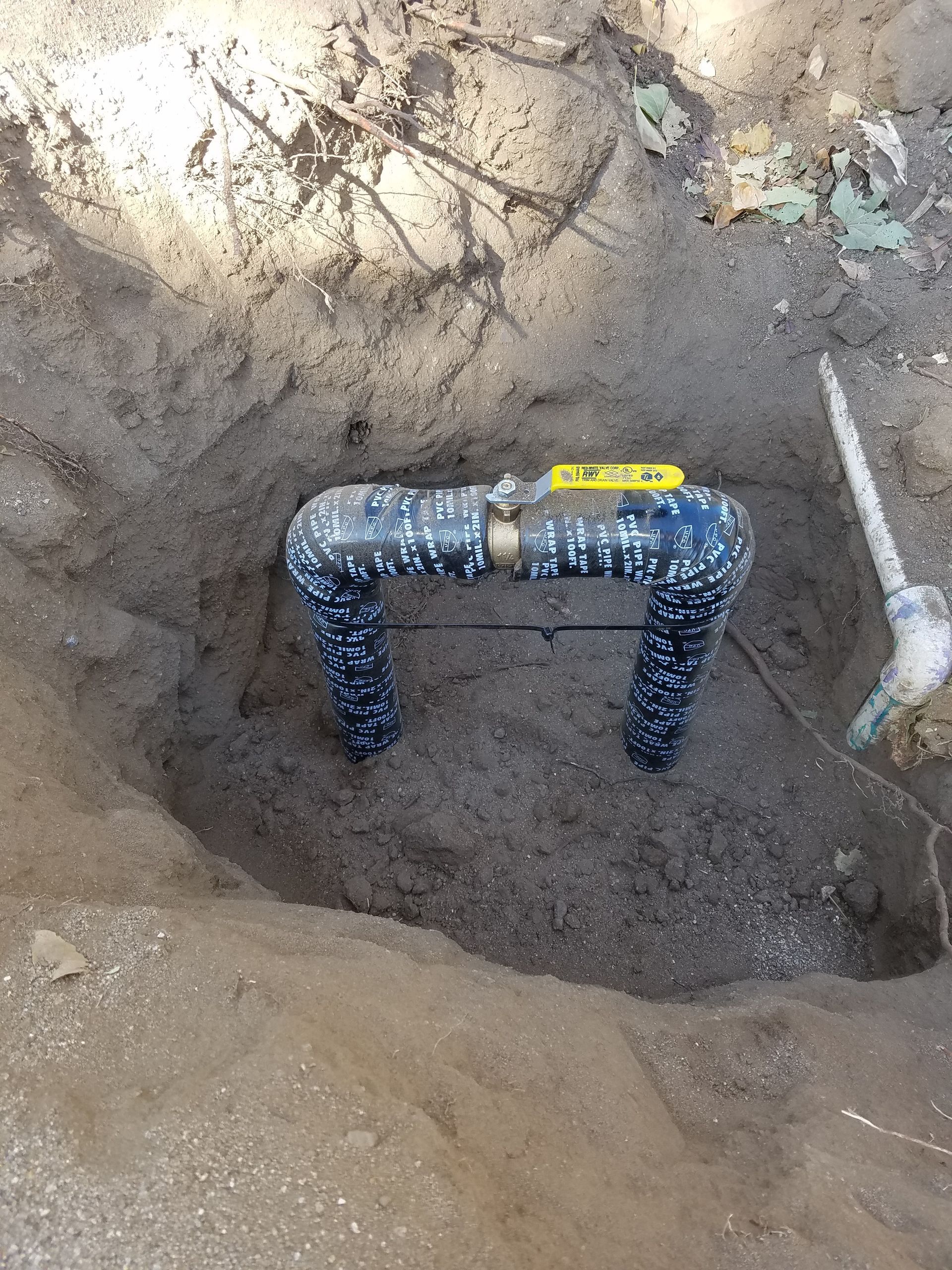
A reroute takes the affected underground run out of service and replaces it with a new line through another suitable path. Depending on the house, that path may involve walls, ceilings, an attic, or another accessible area.
This can allow us to replace the affected run while preserving finished flooring and avoiding an opening in the slab.
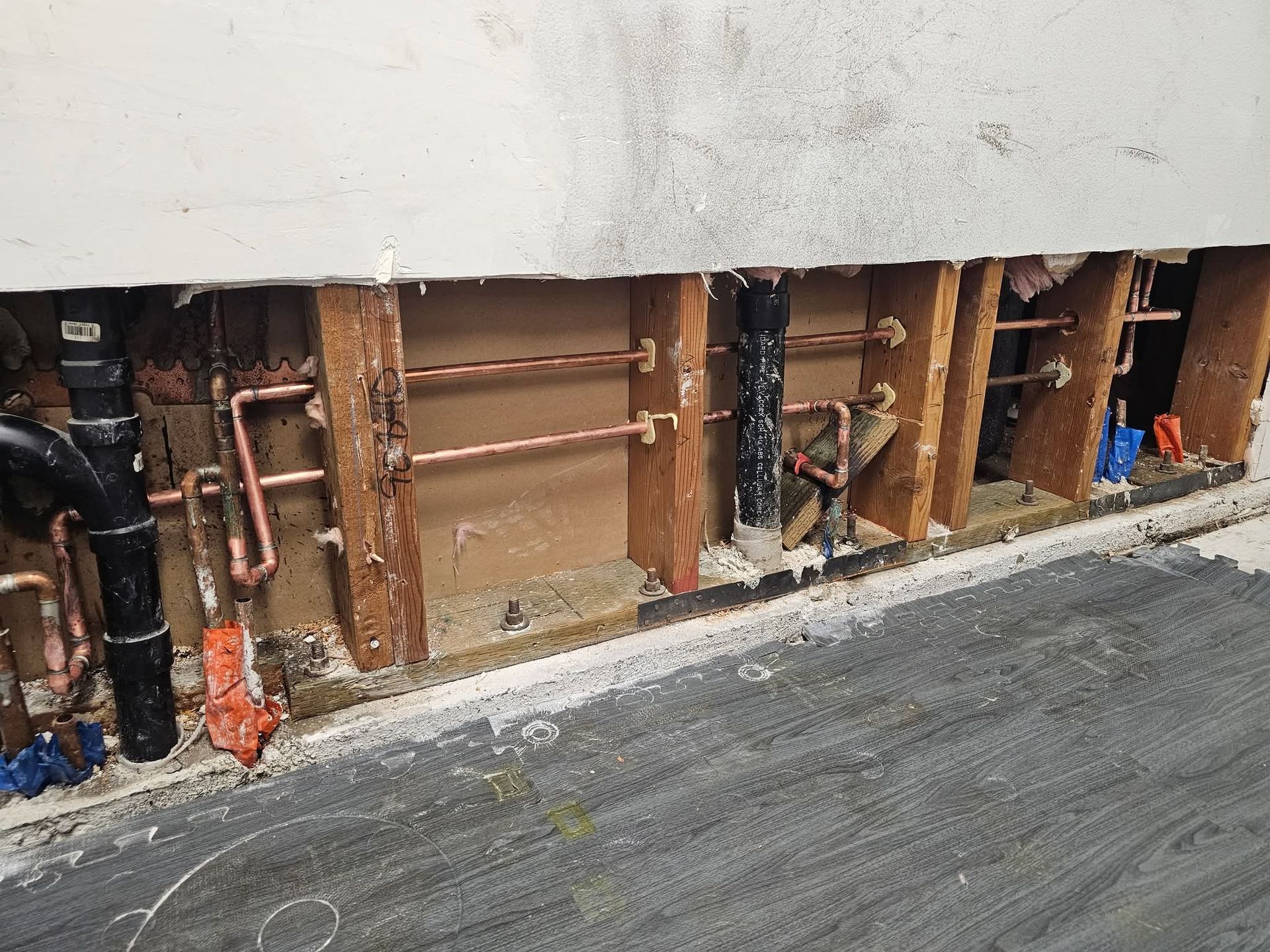
For example, on our Menifee slab-leak reroute, the homeowner had stone flooring that would have been difficult to match. We identified the leaking line’s connection points and installed a new Uponor PEX-a run through an alternative route, leaving the stone floor intact.
A reroute can still require wall or ceiling openings. Before work begins, the homeowner should understand where access is needed and how drywall, texture, and paint will be handled.
Replacing one line also does not replace every other pipe in the house. Previous leaks and the condition of the remaining plumbing may make a broader repipe worth discussing, but one slab leak does not automatically require it.
When a Localized Repair Makes Sense
There are situations where direct access to the damaged piping is practical.
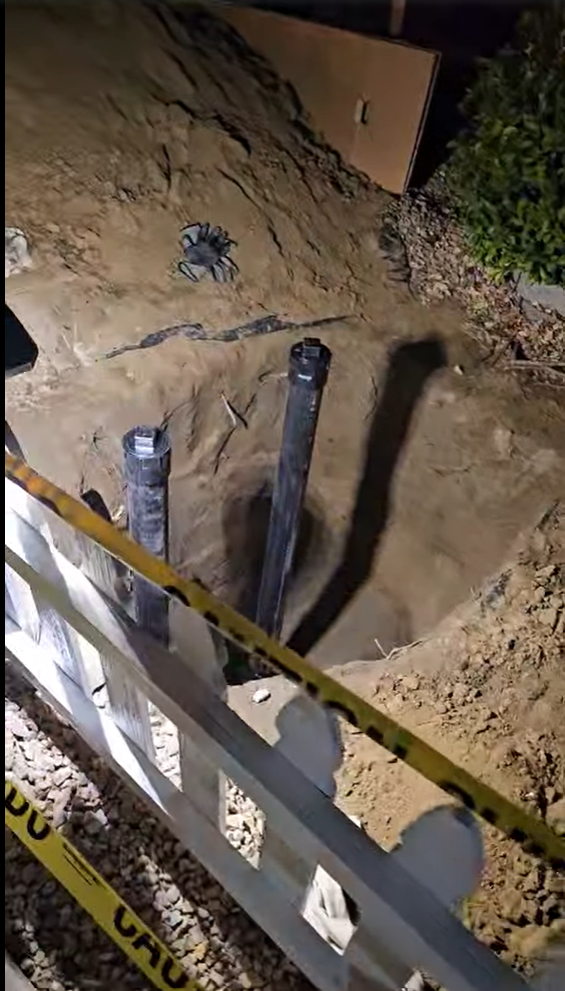
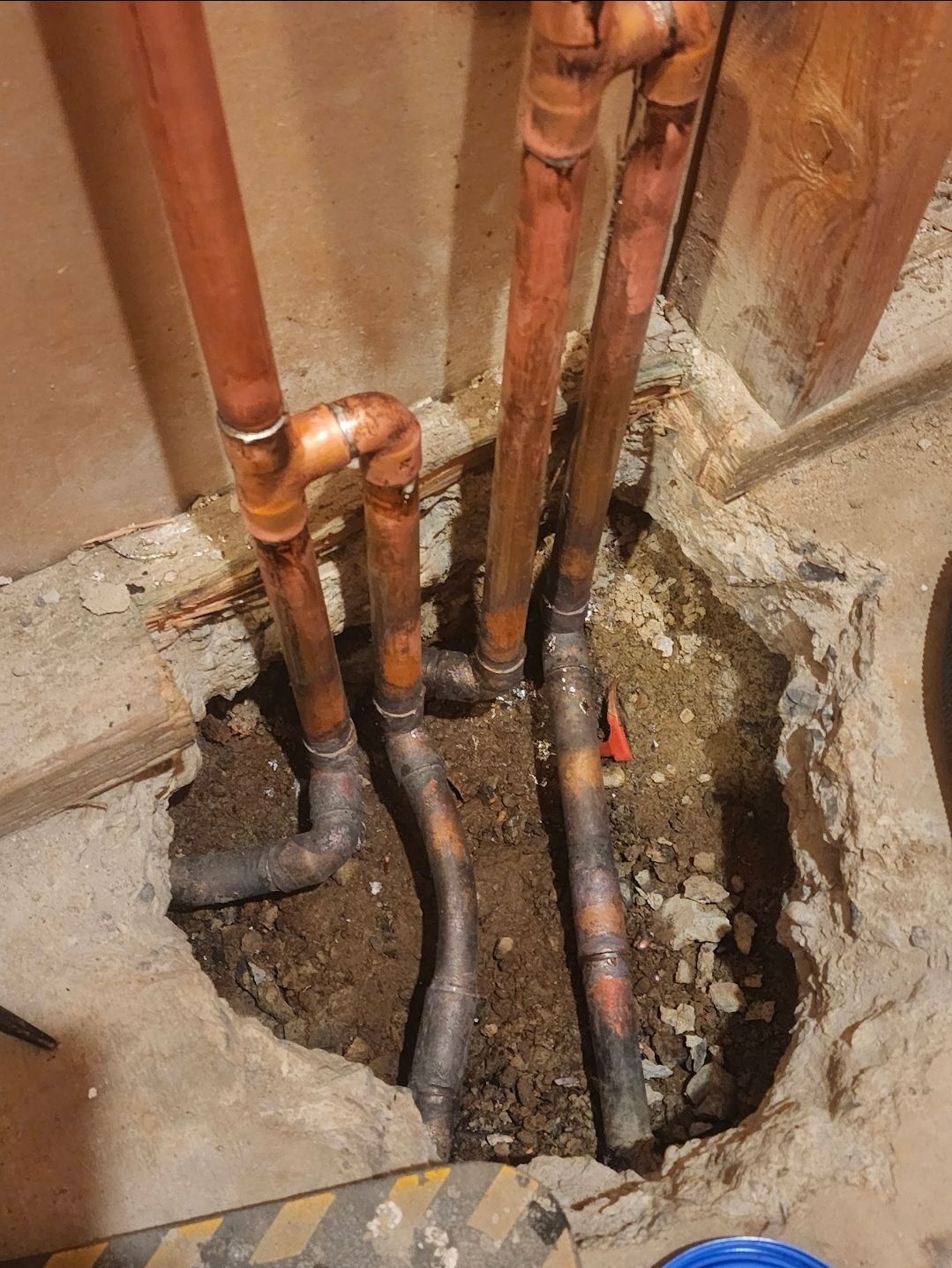
During our French Valley manifold repair, the affected piping could be reached through a closet floor. We pulled back the carpet, opened a relatively small section of concrete, repaired the damaged copper manifolds, and verified that the plumbing held pressure before patching the slab.
That access made a localized repair a reasonable choice for that homeowner.
The decision should account for the actual plumbing problem, the work needed to reach it, the piping that will remain, and the restoration involved.
Why We Check the Garage for a Post-Tension Stamp
As part of evaluating the home, we check the garage for a post-tension slab stamp or warning marking.
Post-tensioned concrete contains tensioned steel tendons. That matters whenever someone is considering cutting, drilling, or opening the slab.
The stamp helps identify the foundation type; it does not show where the tendons are located. Not finding a visible stamp is also not proof that the slab is safe to cut.
If concrete access is necessary, the slab construction and proposed opening need appropriate professional evaluation before work begins. The Post-Tensioning Institute provides guidance on evaluating and repairing these structures.
When a suitable reroute is available, it can allow the plumbing repair to proceed without opening the slab.
When to Call for Help
Arrange an evaluation when unexplained water use, recurring moisture, unusual warmth, or persistent water noise does not have an obvious cause. You do not need to find several signs before calling.
If water is actively spreading, seek help promptly. If you know where the home’s water shutoff is and can reach it safely, shutting off the supply can help limit further water loss. Stay clear of water near electrical equipment.
Photos, recent water bills, and a description of when the symptoms occur can help us understand what you are seeing.
Rodgers Air Conditioning & Plumbing provides slab-leak detection, water-line repairs, and rerouting for homeowners in French Valley, Murrieta, Menifee, and Temecula.
Call (951) 467-5096 or contact Rodgers to schedule an evaluation. We can identify the affected plumbing and explain the repair options that fit your home.