Sewer Line Backing Up? What to Do Before the Plumber Arrives
What to Do Immediately When Sewage Backs Up
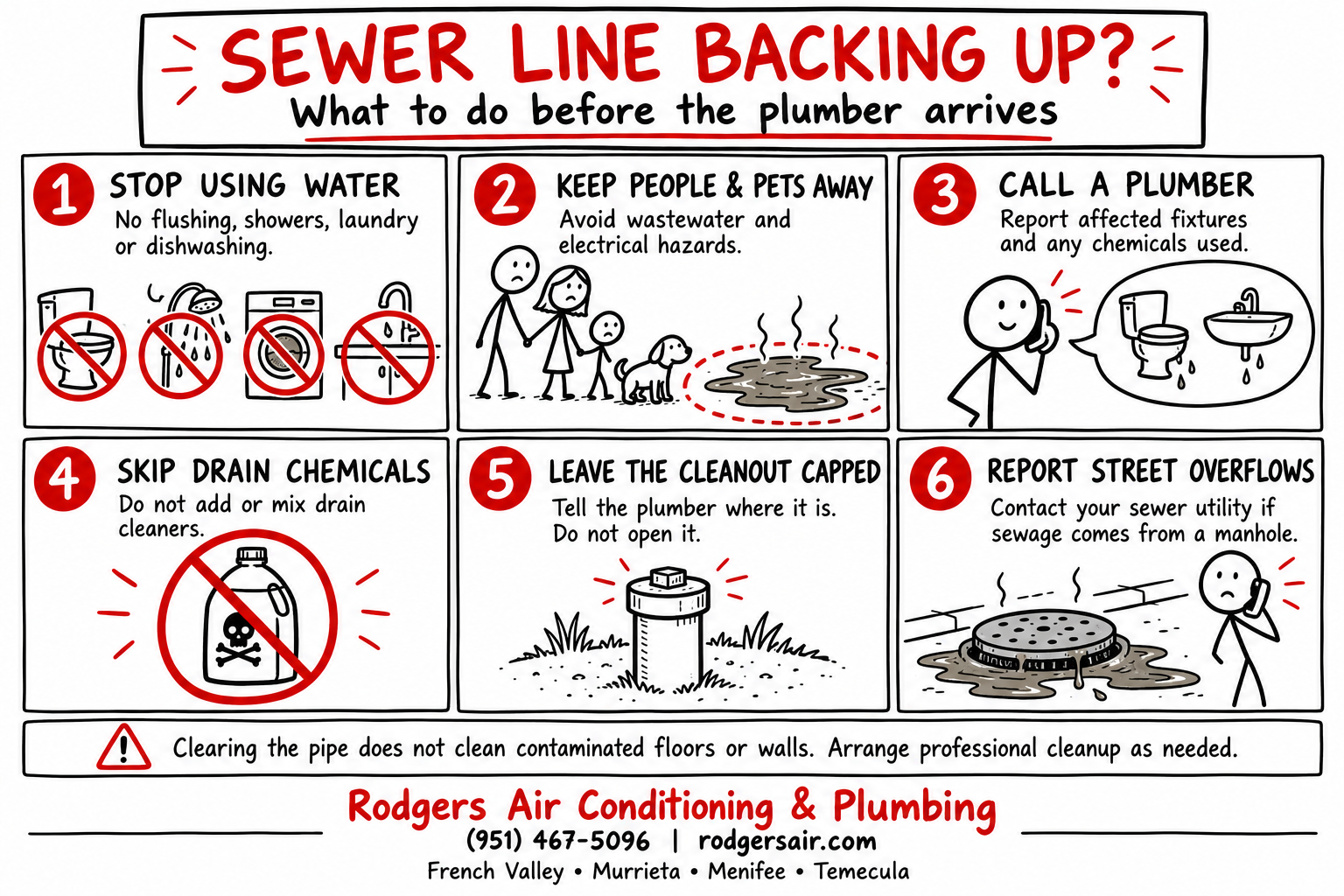
1. Stop sending water down the drains. Let everyone in the house know. Avoid flushing toilets, running sinks or showers, and using the washing machine or dishwasher until the problem is assessed.
2. Keep people and pets away. Avoid contact with wastewater and contaminated belongings. Keep clear of standing water near outlets or appliances; do not enter it to reach electrical equipment.
3. Call for plumbing help. Explain where water is appearing, which fixtures are affected, and whether the level is still rising. Report any drain chemicals already used.
4. Make safe access easier. Move clean belongings out of the work path if you can do so without entering wastewater. Point out the exterior sewer cleanout if you know its location, but leave the cap in place.
If sewage has reached flooring, walls, or other building materials, arrange professional cleanup and drying as needed. Clearing the sewer restores drainage; it does not remove contamination from the home. Seattle Public Utilities’ sewage-backup guidance explains these exposure and cleanup concerns.
Is It One Clogged Drain or a Shared Sewer Problem?
One slow bathroom sink, with the rest of the plumbing working normally, may have a blockage close to that fixture. Several affected fixtures suggest a restriction farther along a shared drain or sewer line.
Useful clues include a toilet flush causing water to rise in a tub or shower, more than one toilet backing up, or wastewater appearing at a low drain while another fixture is being used. Gurgling can accompany a drainage problem, but the sound alone does not identify its location or cause.
Tell the plumber what you already observed. Do not keep running water to reproduce the problem. Similar symptoms can have different causes, and testing should not add to an active overflow.
What to Avoid While Waiting for Help
Do not keep flushing to see whether the blockage has cleared. Water that temporarily recedes is not proof that the line is open.
Skip chemical drain cleaners during a sewage backup. They can leave hazardous chemicals in standing wastewater and complicate the work. Do not mix products. If you have already used one, tell the technician its name and when it was added.
Do not remove a cleanout cap to release the backup yourself. A backed-up line can discharge sewage when opened. Knowing where the cleanout is helps; opening it should be left to the person evaluating the line.
Also avoid pulling a toilet or using rented sewer equipment during an active backup. Access and equipment choices affect where wastewater can escape and whether the obstruction can be reached.
When the Sewer Utility Should Be Contacted
A blockage can be in the home’s piping, its connection to the public sewer, or the public system. If sewage is coming from a street manhole, neighboring properties are affected, or wastewater keeps entering despite everyone stopping water use, report that to your sewer utility promptly. Those observations warrant investigation; they do not prove which pipe is responsible.
Contact the sewer provider listed on your bill. For properties served by EMWD, its 24-hour emergency information page lists sewer blockages and manhole problems among the situations it handles. Tell the plumber if a utility crew is also responding so the work can be coordinated.
How We Determine What the Sewer Line Needs
We start with the affected fixtures, the history of the problem, and the available access. Has this happened before? Was the line recently cleared? Is there an exterior cleanout, or would reaching the drain require access through the home?
A cleanout is a capped access point connected to the drain or sewer. Its location can make a substantial difference to the work. An accessible opening outside may allow equipment to reach the obstruction without being carried through finished rooms.
The clearing method should fit the obstruction and the line. Mechanical snaking and hydro jetting have different uses; adding high-pressure water is not automatically the right first step when a sewer is already full.
A sewer camera can help evaluate the pipe when there is enough access and visibility. Standing wastewater or debris can limit the view, so clearing the obstruction may be needed before a useful inspection. Our drain and sewer repair services cover evaluating the problem and explaining the appropriate work.
A Menifee Backup That Needed Better Access
On a Menifee mobile-home job, the whole home was backed up and there was no accessible exterior cleanout. Working through a toilet opening meant the sewer cable had to follow extra piping and several turns before heading toward the obstruction.
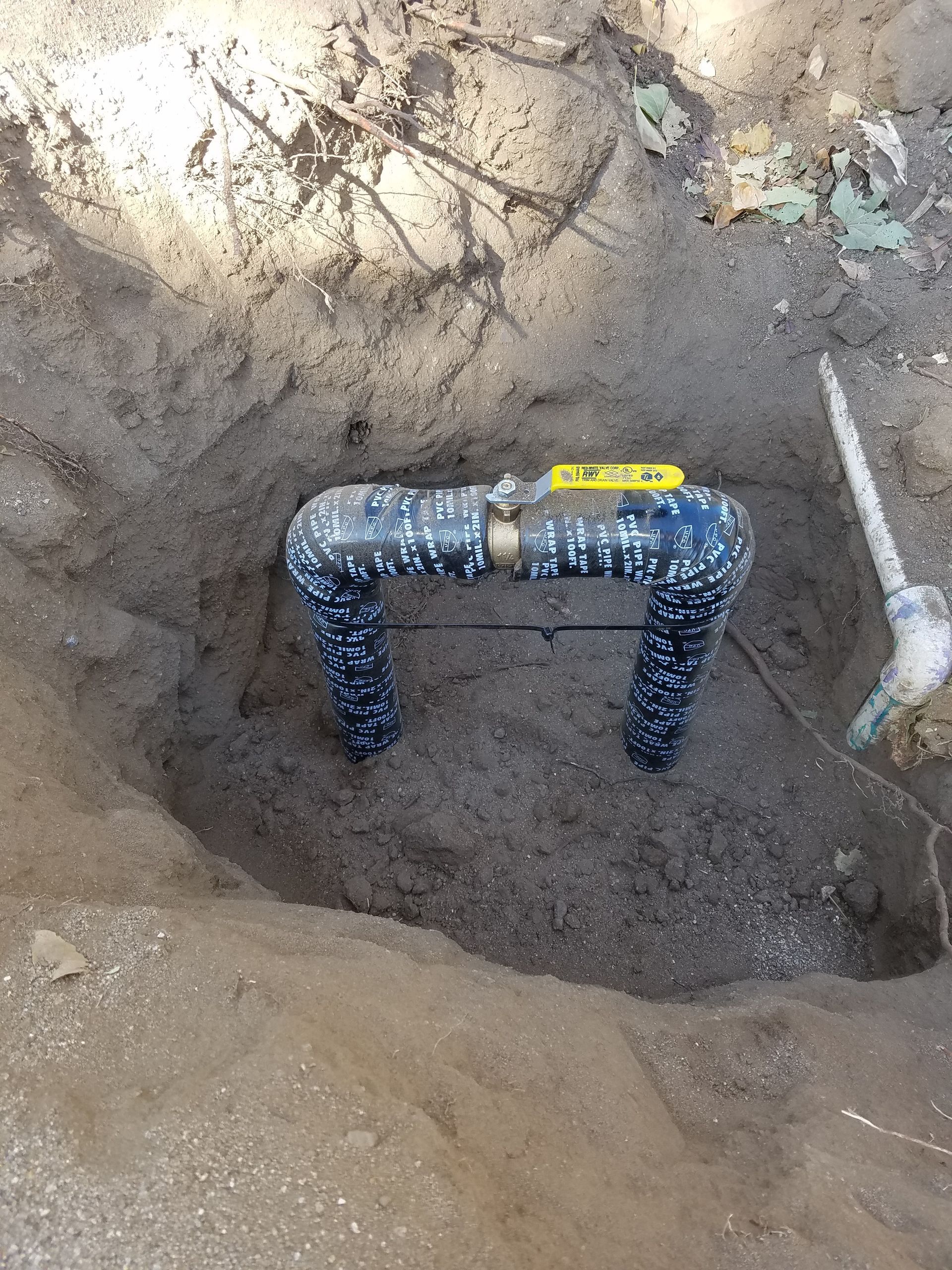
Even with approximately 100 feet of cable, we could not reach the blockage from that access point. We located the sewer in the front yard and installed a two-way cleanout. From there, the same machine could reach and clear the wipes and grease that were restricting the line.
After clearing the backup, a camera inspection showed the remaining sewer piping was in good condition. The solution was better access and clearing the obstruction. You can see the full explanation in our Menifee sewer cleanout case study.
Does a Sewer Backup Mean the Pipe Needs Replacement?
No. A removable obstruction in an otherwise serviceable line may be addressed by cleaning. A broken, separated, or collapsed section can require repair. Recurring backups deserve investigation because repeatedly opening a narrow path through debris may leave the underlying problem unresolved.
Ask what the technician found and what supports the proposed repair. If camera footage is available, have the relevant area explained. The recommendation should identify the problem being corrected, the access needed, and any excavation or restoration included in the scope.
Our Menifee job illustrates why those distinctions matter. Difficulty reaching a clog did not mean the entire sewer was damaged. Each property’s findings should guide its repair.
Get Help With a Backed-Up Drain or Sewer
If your drains are backing up in French Valley, Murrieta, Menifee, or Temecula, call Rodgers Air Conditioning & Plumbing at (951) 467-5096 to discuss the problem and current availability.
For a non-urgent inquiry, use our contact page. During an active overflow, call rather than relying on an online form, and avoid using the plumbing while you arrange help.