
The homeowner told us the cartridges and rubber seals in this two-handle shower had been replaced repeatedly before they called us. The leak kept coming back. Calcium buildup inside the old valve was cutting into the rubber gaskets, so another set of seals was unlikely to last. We recommended replacing the valve instead of repeating the same repair.
Shower Valve Repair and Replacement in Winchester, CA
Gary Rodgers • September 27, 2026
When a shower valve problem needs a closer look
A shower that keeps dripping or will not hold a comfortable temperature does not automatically need a new valve. We start by looking at the valve and the parts inside it. If a cartridge will solve the problem, we can replace it. But when mineral buildup has damaged the sealing surfaces, another cartridge may only bring the homeowner back to the same problem. In that situation, we talk through replacing the valve and trim together.
We have replaced plenty of shower valves in French Valley and the surrounding Winchester area. These photos show a few of those jobs: a two-handle conversion, a leak we reached through a closet, a remodel cover plate, and a valve installed while an entire shower was being replaced. The access was different each time, which is why we look at the room and the plumbing before deciding how to proceed.
To discuss a shower valve concern, request a shower valve evaluation or call (951) 467-5096.
What is a shower valve, and what gets replaced?
The valve body sits behind the wall and connects to the hot and cold pipes. Many valves have a cartridge inside that we can sometimes replace from the shower side. Older styles may use stems and rubber seals. Replacing one of those parts is a smaller job than cutting out the valve body and reconnecting the pipes.
Trim is what you see and touch: the handles, decorative plate, and other finish pieces. It has to fit the valve behind the wall. When we replace the valve, we install matching new trim as part of the job.
Real shower valve work in Winchester and French Valley
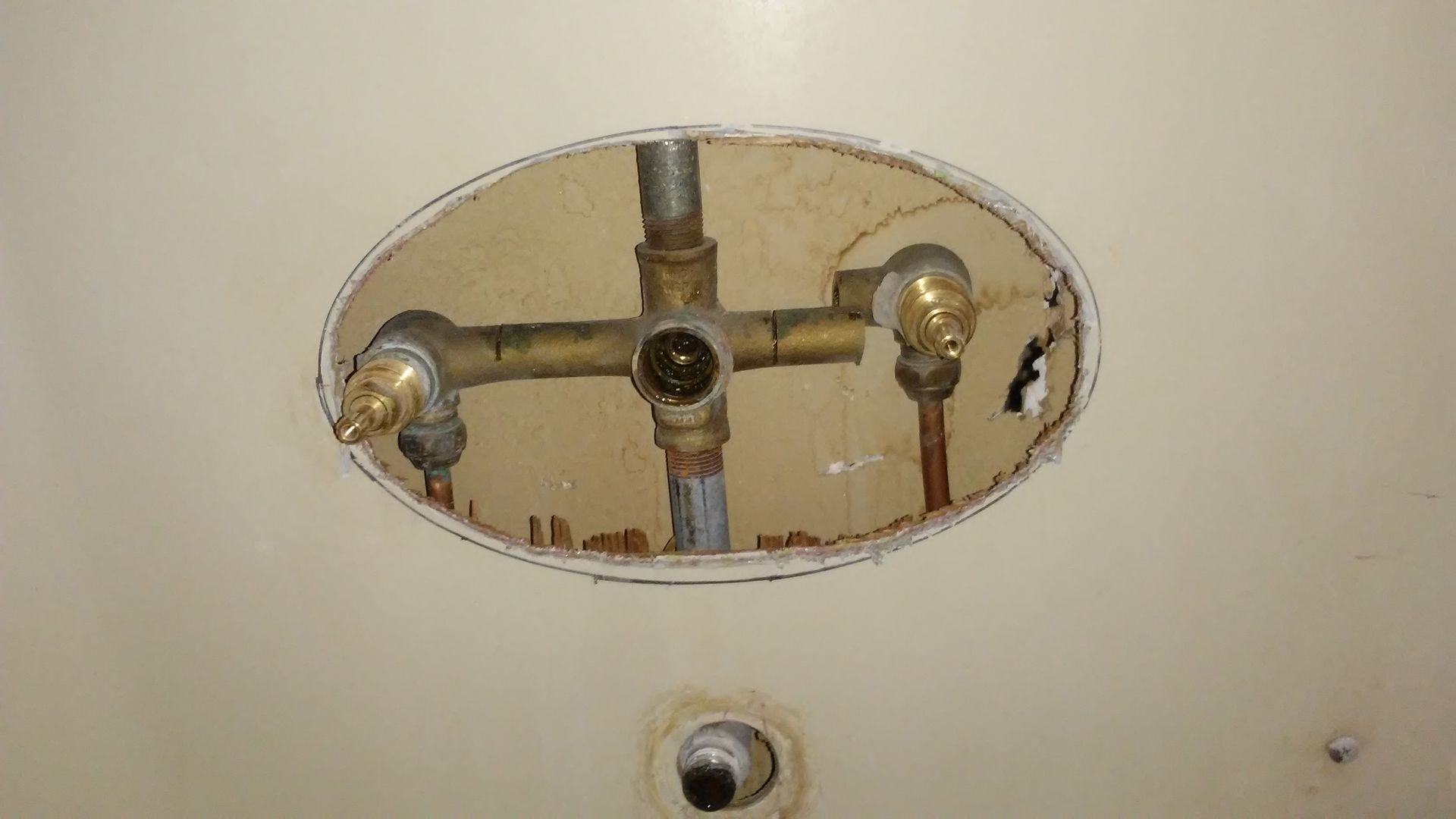
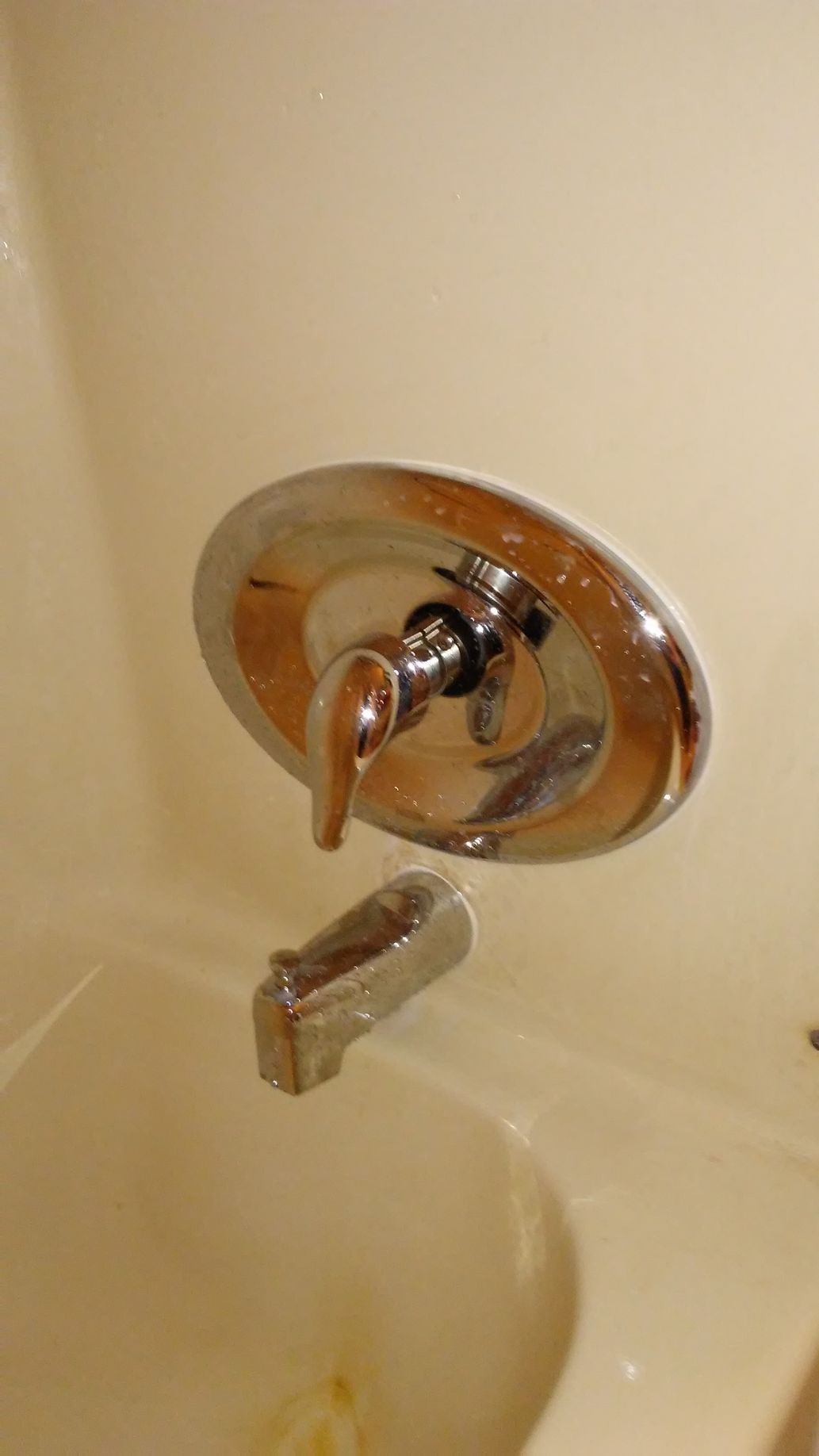
We worked from the shower side. To safely solder the new single-handle Moen valve, we made a larger opening in the existing surround. The chrome remodel plate covers that opening and finishes the area around the new handle above the tub spout. Front access is often how we handle a conversion when the plumbing is on an exterior wall and there is no way in from behind.
A leaking gold-finish valve replaced from behind the wall
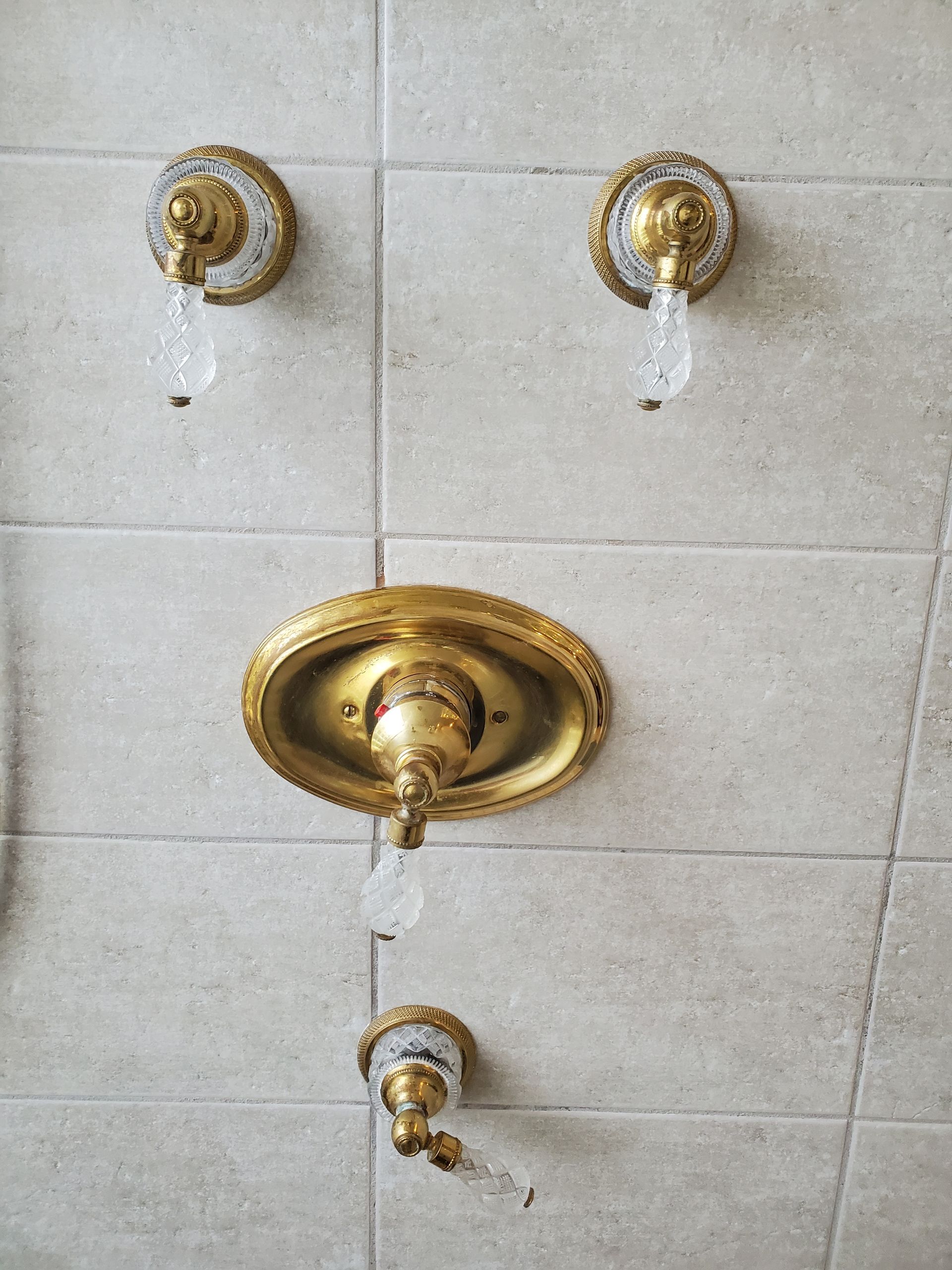
The leak in this shower was inside the wall, behind the gold-finish controls. A closet sat on the other side, so we cut an opening in the closet drywall to reach the valve. We could do the plumbing work from there and leave the shower tile and its control holes alone.
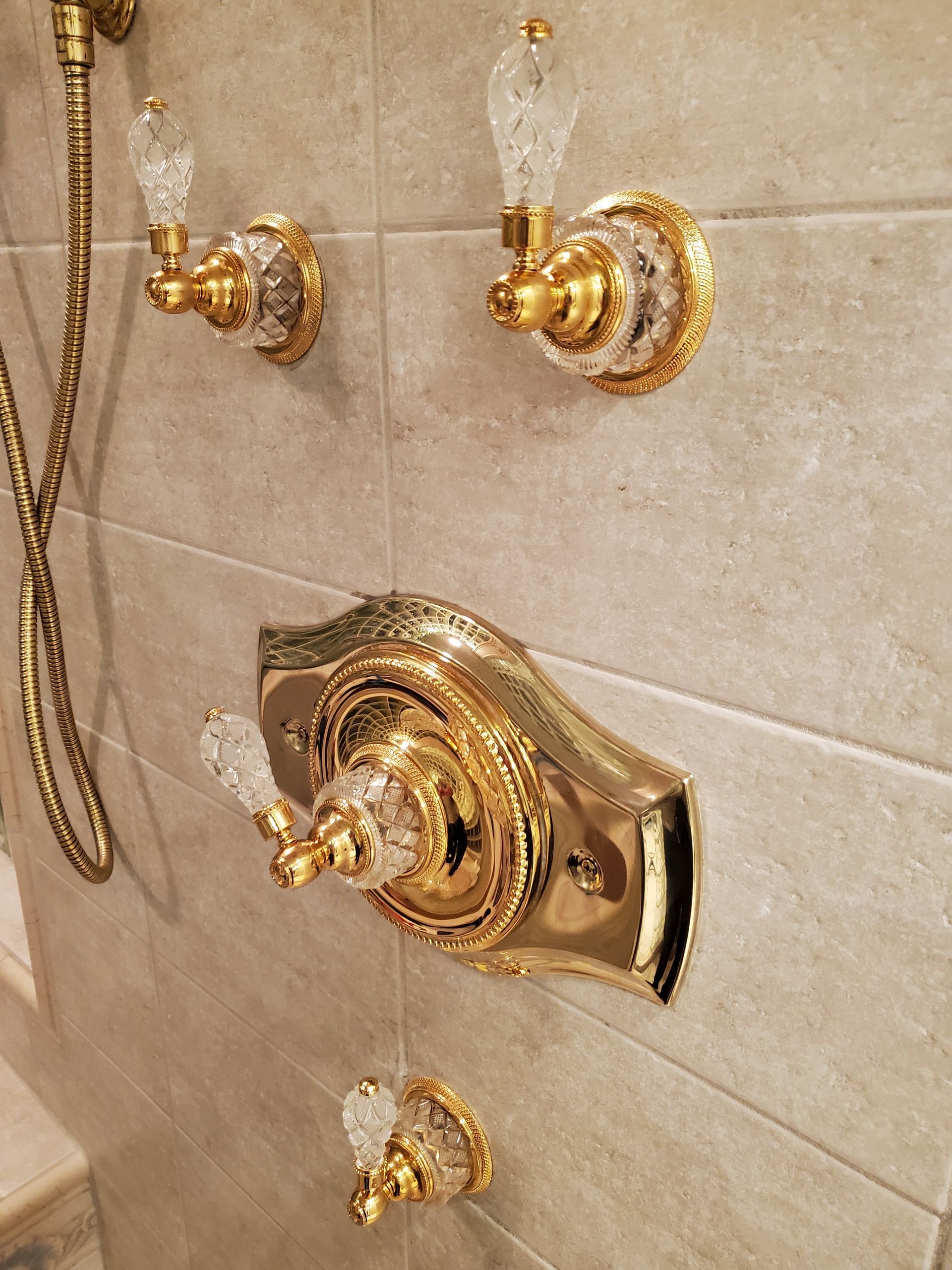
We located the original manufacturer’s updated replacement valve and installed it through the closet opening. The controls lined up with the existing holes in the tile, so the shower needed no tile work. We found new trim that closely matched the old gold style, right down to the clear decorative handles. The fresh gold finish looks noticeably brighter.
A remodel cover plate for front access
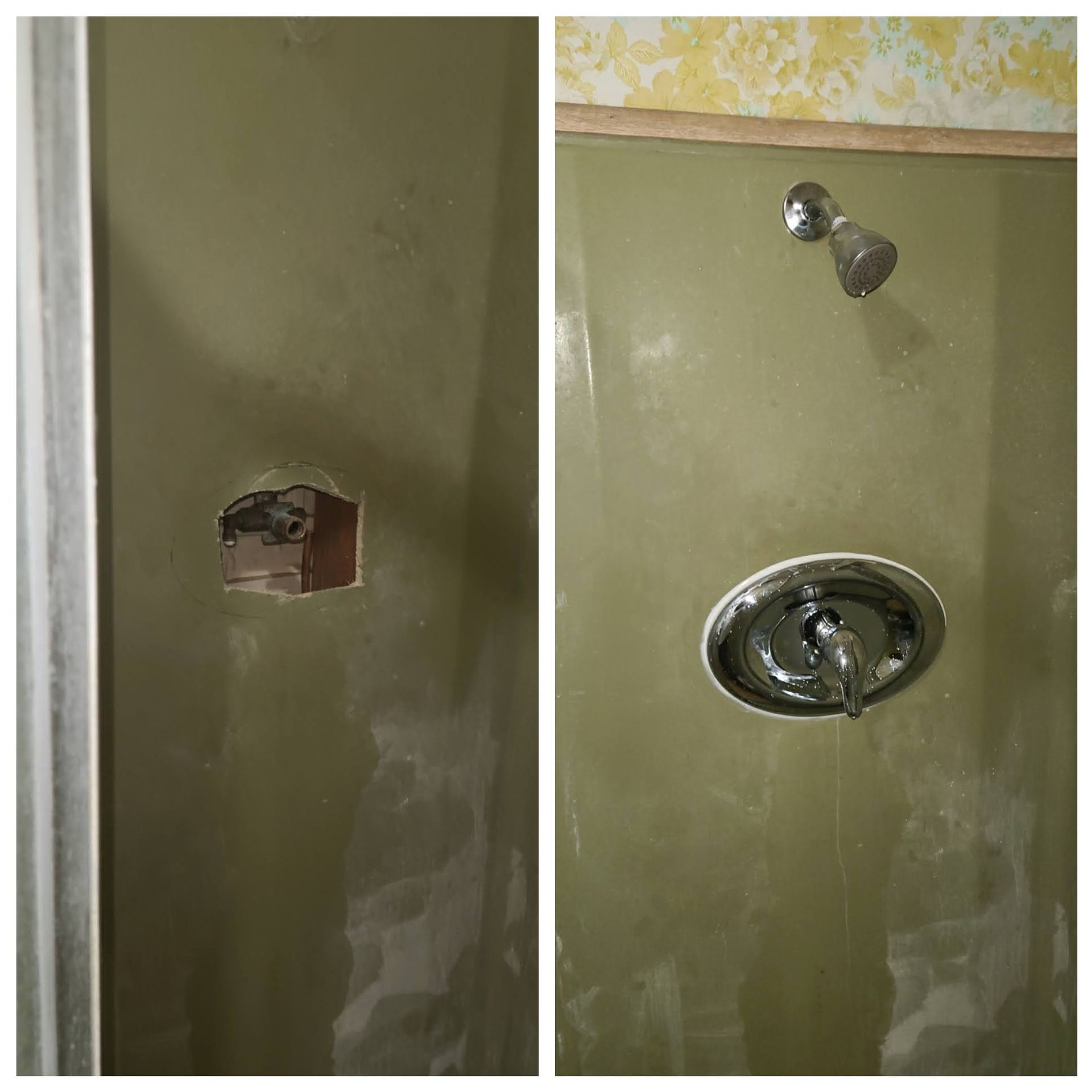
Here is another valve we replaced from the shower side, this time with a different remodel kit. We opened the area around the old controls to give ourselves room to work. Once the new valve was in, the wide chrome plate covered the cutout and framed the single-handle control. The before-and-after photo shows both stages of that job.
A new valve during a shower replacement
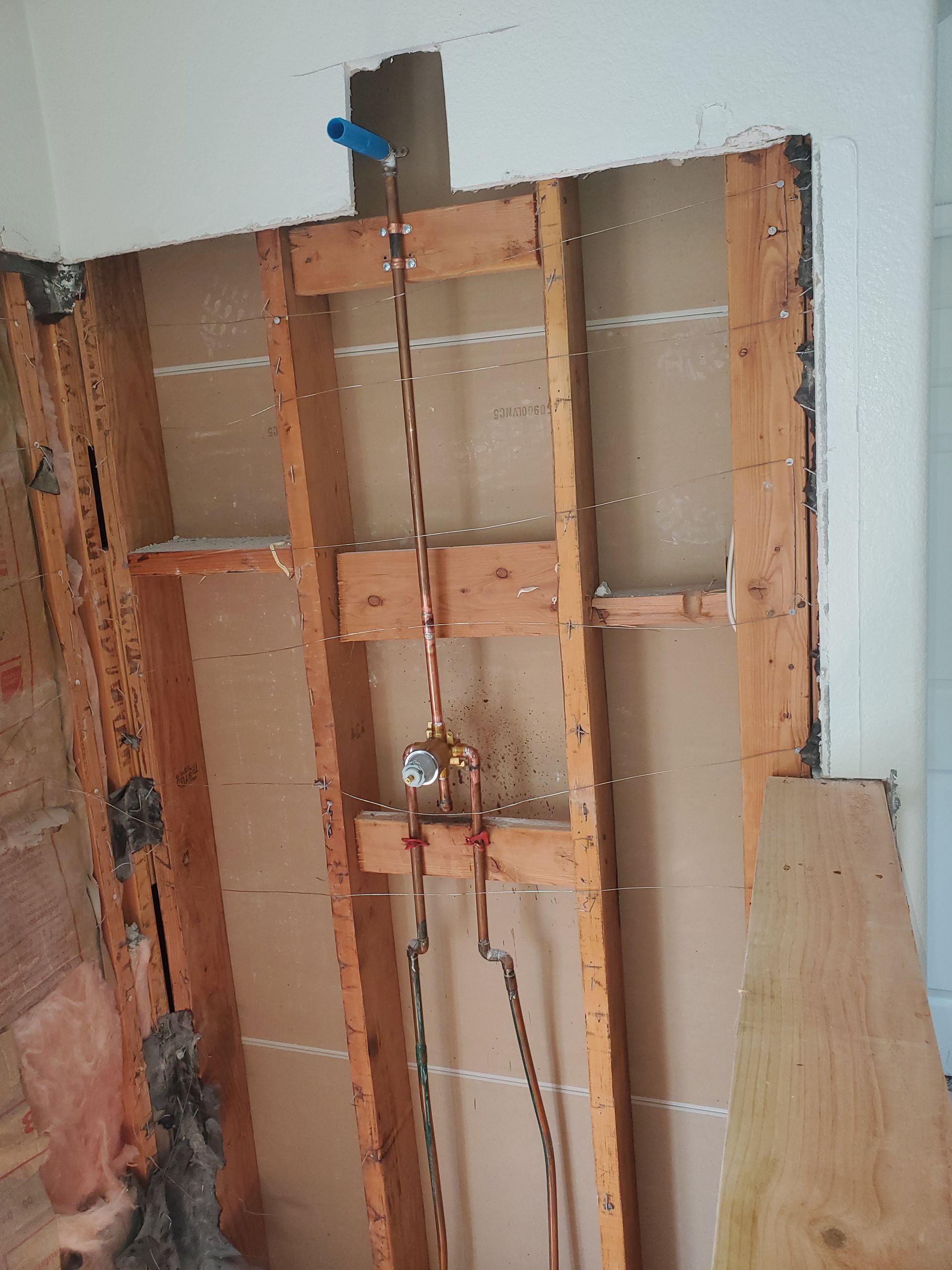
The shower was being replaced, so the wall was open when we installed this valve. We ran the copper supplies to it, set it at the depth needed for the finished shower, and secured the riser and upper outlet. With everything exposed, we could make the connections and check the layout before the new walls covered the piping.
Signs your shower valve needs attention
A showerhead that keeps dripping long after the handle is off is a common reason people call us. Sometimes a new cartridge or stem takes care of it. Before we put one in, though, we look for mineral scale inside the valve. Hard-water buildup can damage a new seal, as it did in the two-handle shower above.
If the shower will not get hot, or its temperature jumps around while the sink works normally, we check the shower valve and its supply lines. There is no point adjusting the water heater until we know why that shower is acting differently.
Low flow may start at the showerhead, in the supply piping, or inside the valve. Water showing up in the wall is a more urgent call. Stop using that shower and have the leak traced before more damage develops.
When is cartridge repair enough, and when should the whole valve be replaced?
We remove the trim and identify the valve before deciding whether a cartridge repair is worthwhile. If the right part is available and the inside of the valve is in good shape, that may be all the shower needs. We have also seen good new cartridges leak after installation because mineral buildup inside the old valve damaged their seals.
When the valve body is badly scaled or damaged, replacing it makes more sense than repeating a repair that will not hold. A conversion to a different control may also call for a new valve. We check the existing pipes and decide whether front or rear access will give us enough room to install it properly.
Before the work starts, you should know which part is being replaced, where we will open the wall, and whether drywall or tile repair is part of the job.
Pressure-balanced, thermostatic, and multi-outlet controls
A pressure-balanced valve helps limit sudden temperature changes when water pressure shifts elsewhere in the house, such as when a toilet is flushed. A thermostatic valve responds to water temperature and adjusts the hot and cold mix toward the selected setting. The controls available for temperature and flow depend on the valve model.
A diverter or transfer control sends water to an outlet such as a showerhead or hand shower. A separate volume control changes how much water flows. That is why a shower with several handles is not necessarily an old hot-and-cold setup; each control has to be identified before we choose replacement parts.
Why the manufacturer and trim design matter
The valve hidden in the wall determines which handle and plate we can install. Even within the same brand, a trim kit has to fit the particular valve family. On the gold-finish job, we tracked down the original manufacturer’s updated valve and found new trim close to the style the homeowner already had. That let us keep the tile and the look of the bathroom.
Can a shower valve be replaced without removing tile?
Yes, in many cases. For the leaking gold-finish valve above, we cut an access opening in the closet drywall behind the shower. The new controls used the same holes in the tile, so no tile work was needed.
When rear access is not available, we may work from the shower side. A larger front opening gives us room to safely solder the new valve, and a properly sized remodel plate covers the opening once the plumbing is complete. That is how we finished the two-handle conversion shown above. Remodel plates and trim come in finishes such as stainless, brushed nickel, and oil-rubbed bronze; the choice has to fit the valve and cover the opening.
What should be checked before the wall is closed?
When shower walls are open, we can set the valve at the right depth for the finished wall, secure the piping, and check the connections before they are covered. The copper rough-in photo above shows that stage during a shower replacement.
On a tub-and-shower installation, the piping to the tub spout must also follow the valve manufacturer’s directions. A restricted spout path can make water come from the showerhead while the tub is filling, a problem called stacking. Before the wall is closed, we check for leaks and confirm that the controls and outlets work as intended. The scope should also say who will finish any drywall or tile work.
Temperature protection needs the right setup
The temperature limit on a new shower valve needs to be set and checked after installation. The correct setup depends on the valve and the home’s water conditions. If the shower suddenly runs too hot, too cold, or changes temperature during use, we look for the cause rather than simply turning up the water heater.
What affects shower valve repair or replacement cost?
A cartridge change and a full valve replacement are very different jobs. For a full replacement, the price also depends on where we can reach the plumbing. Opening closet drywall, cutting a larger opening in a surround, and repairing tile all involve different work. The condition of the old piping and the trim finish matter too.
We can give you a clearer quote after looking at the shower. It should say which parts are included, where we plan to open the wall, and who will handle any drywall or tile repair afterward.
Frequently asked questions about shower valves
Can an old two-handle or three-handle shower become single-handle?
Yes, in many cases. We changed the two-handle tub-and-shower shown above to a single-handle Moen. The valve and piping behind the surround had to change, and the remodel plate finished the larger opening we used for access.
Can you replace just the cartridge?
Often, yes. We first identify the valve and look inside it. If mineral scale has damaged the sealing surfaces, a new cartridge may leak just like the old one, and we will discuss replacing the valve instead.
Will replacing the showerhead stop a constant drip?
Usually not. A little water can drain from the showerhead after use, but a steady drip with the handle off points us toward the valve. We would check that before replacing the showerhead.
Why is the bathroom sink hot but the shower is not?
We start at the shower, since hot water is reaching the sink. A worn cartridge, a blocked supply, or the valve’s temperature limit could be responsible. We check those before changing the water-heater setting.
Why does water come from the showerhead while the tub is filling?
Plumbers call this stacking. Water takes the showerhead route while the tub is filling because the path to the tub spout is restricted. We check the spout, piping, and valve installation to find the restriction.
Does the number of handles identify the valve type?
No. One handle may set temperature, another may change the flow, and a third may switch outlets. We identify the controls and the valve behind them before ordering parts.
Are shower valves and trim kits universal?
No. The trim must fit the valve family in the wall. Even a new kit from the same manufacturer may not fit an older valve, so we identify the valve before buying parts.
Do you have to shut off water to the entire house?
Sometimes. If the valve has working local service stops, we may be able to shut off only that shower. Otherwise, the house water needs to be off while we do the work.
How long does a shower valve replacement take?
We can estimate the time after we see how the valve can be reached. A cartridge change is generally quicker than opening a wall, soldering in a new valve, and installing trim. Drywall or tile repairs may happen after the plumbing visit.
How long should a shower valve last?
There is no set replacement age. Water quality and the condition of the valve matter more than the calendar. A worn cartridge may be repairable; a valve body damaged by scale or corrosion may need replacement.
Can I keep using a shower that may be leaking inside the wall?
Stop using the shower until the leak is found. If a supply connection is leaking, the shower handle may not stop the water. Turn off an accessible water shutoff if it is safe to do so, and keep clear of any wet electrical equipment.
Should the valve be considered during a shower remodel?
Yes. An open shower wall is the easiest time to inspect the existing valve, plan the controls and trim, and set the valve for the thickness of the new wall. That is what we were able to do in the rough-in project above.
Shower valve help in Winchester and French Valley
Each shower above called for a different way to reach the valve. We opened one surround from the front, worked through a closet behind another, and installed a third valve while the shower wall was open. If your shower drips, will not hold a comfortable temperature, or may be leaking into a wall, we can look at the plumbing and explain what kind of repair makes sense.
Call (951) 467-5096 or request service to discuss shower valve repair or replacement in Winchester, including French Valley.
More plumbing resources
For related local service information, see Rodgers’ Winchester plumbing services and plumbing repair services.
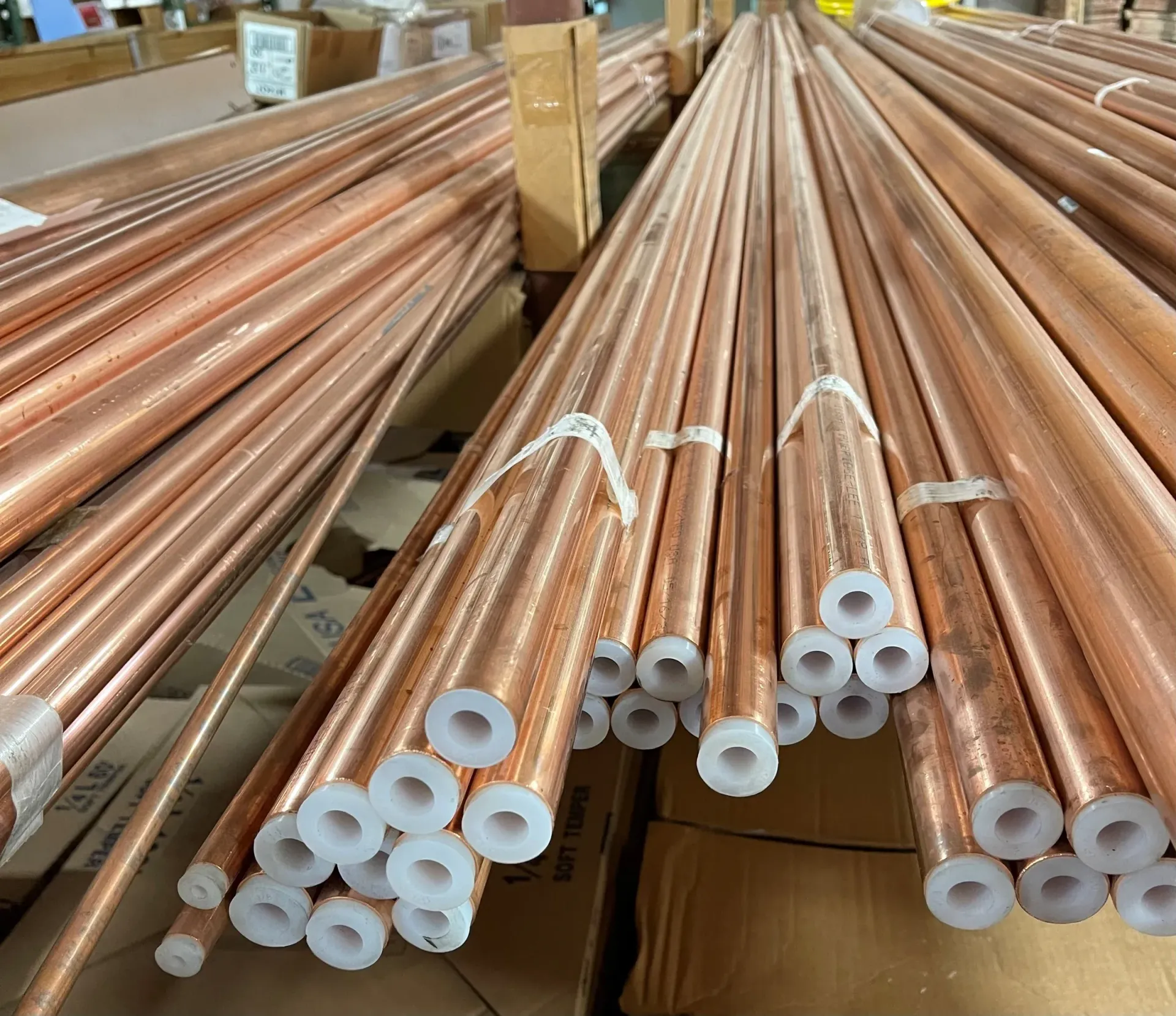
A Winchester laundry room leak led to an under-slab cold-water line. See how Rodgers isolated the branch and rerouted it without disturbing newly installed flooring.
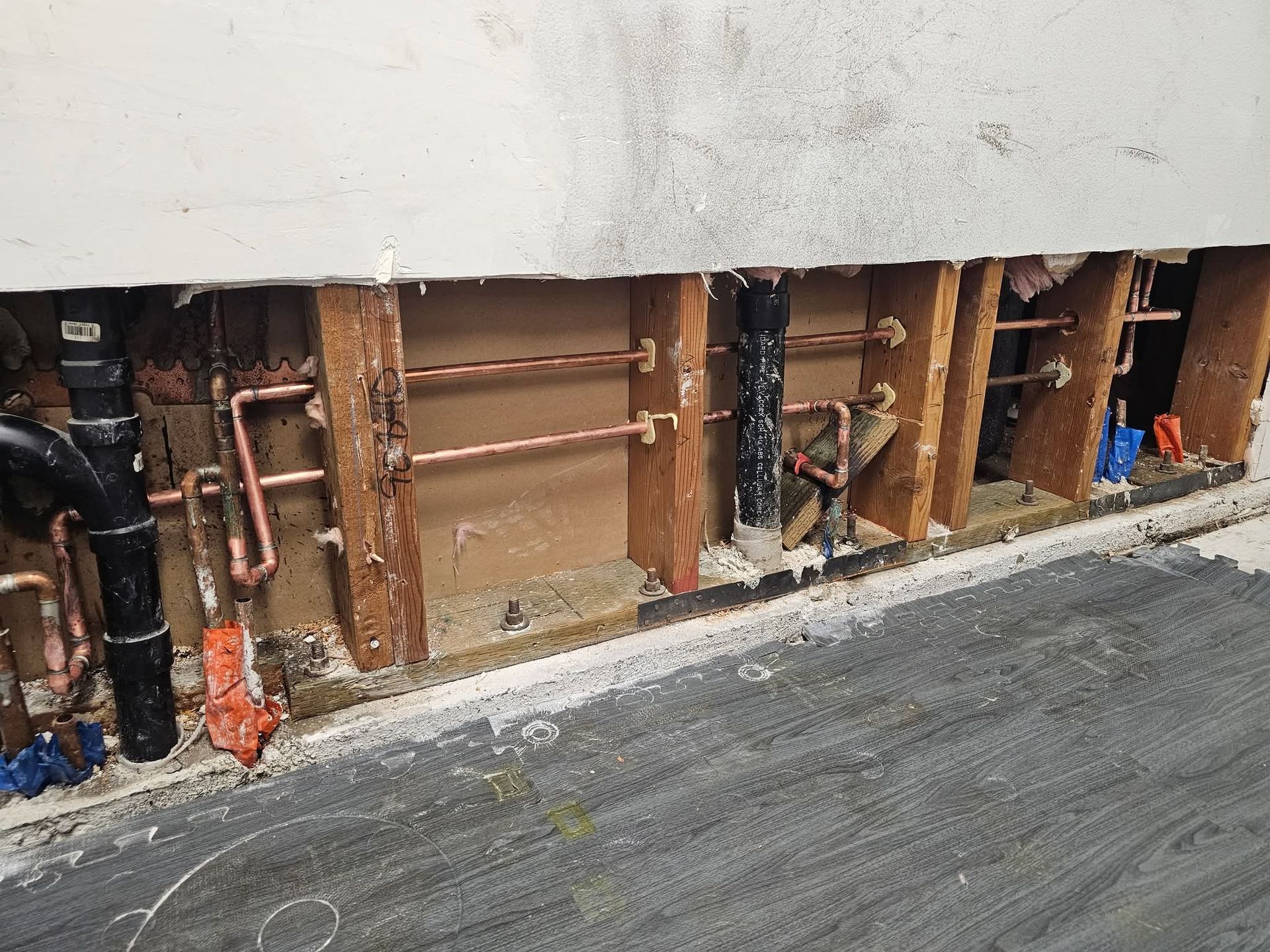
See how we repaired a French Valley slab leak by rerouting hot and cold copper water lines through the bathroom wall and abandoning the underground lines.
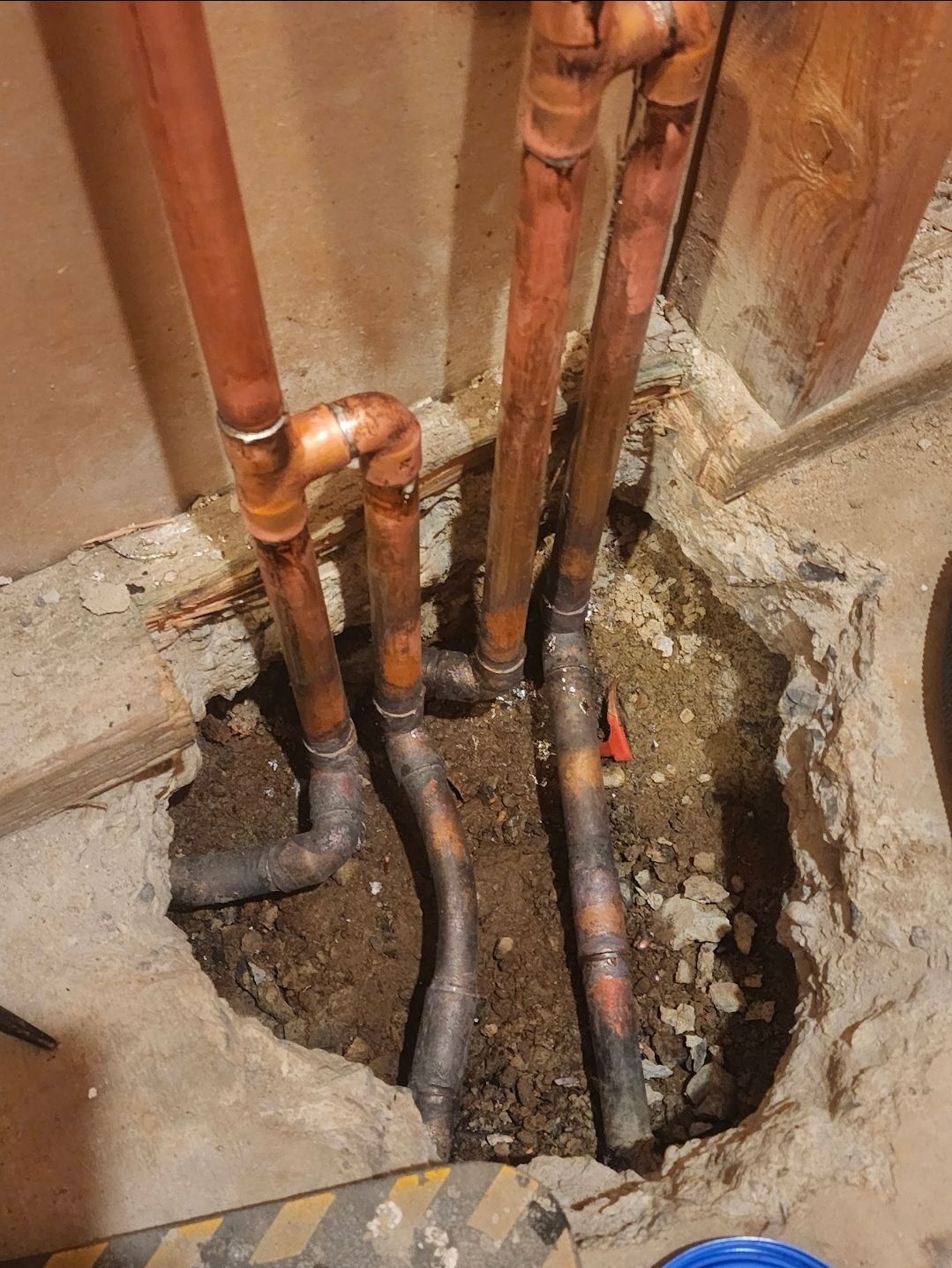
See how Rodgers Air Conditioning & Plumbing repaired leaking hot and cold copper manifolds beneath a French Valley, CA slab and corrected water pressure over 100 PSI.
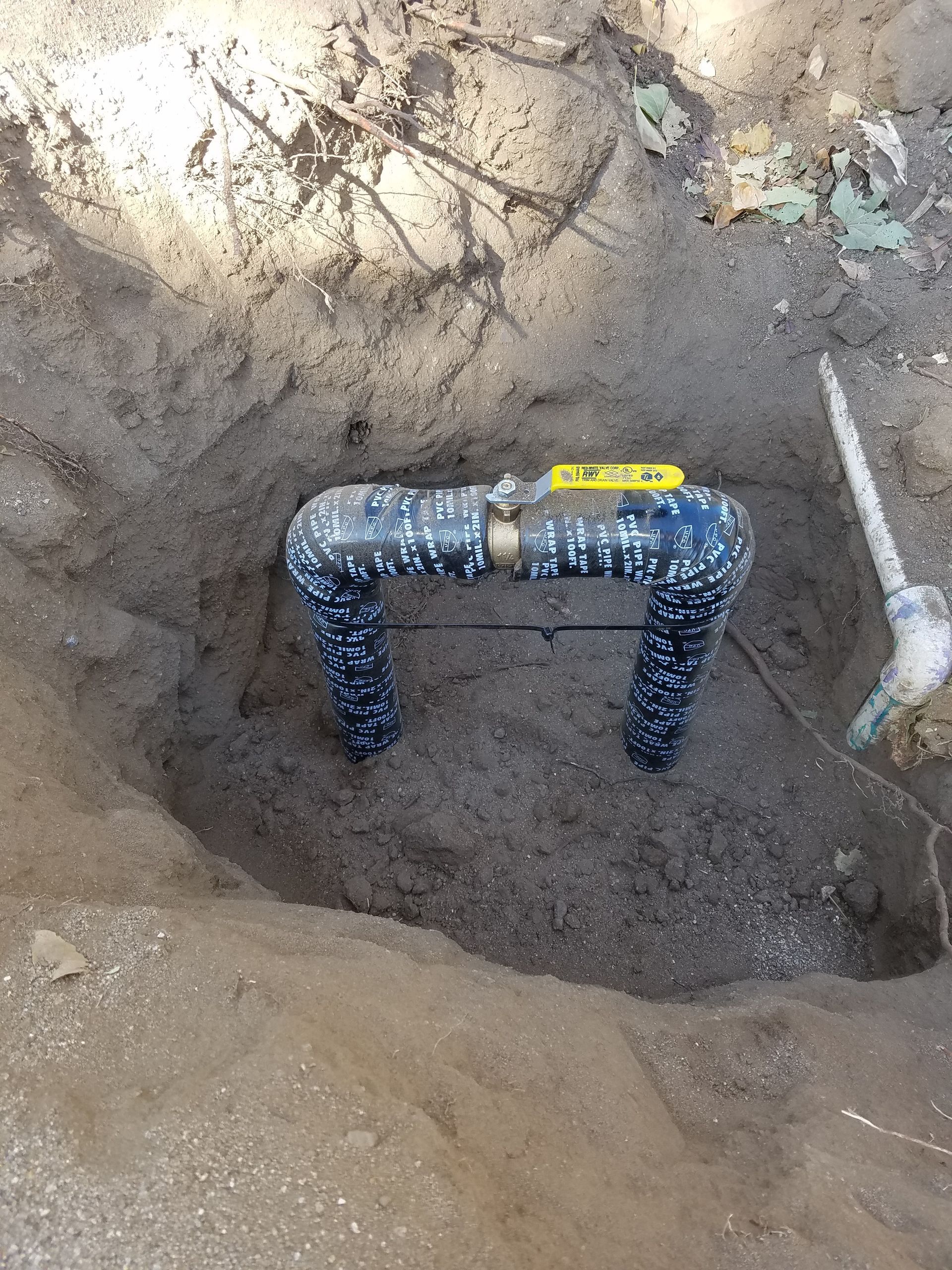
See how Rodgers installed a dedicated irrigation shutoff valve in French Valley so a homeowner could isolate a yard leak while keeping water on indoors.
Root intrusion on main water line overview
A water stain suddenly appearing on the ceiling can make it difficult to know where to start. The water may be showing downstairs, but the plumbing problem causing it could be several feet away or on the floor above. We recently performed a leak detection service at a home in Temecula, California , after the homeowner discovered a ceiling leak underneath an upstairs guest bathroom. Because there were multiple plumbing fixtures above the damaged area, we did not want to assume where the water was coming from. We inspected the bathroom, looked for signs of active and previous leakage, and eventually traced the problem to the upstairs toilet. One of the first clues was something many homeowners probably would not think much about: the toilet bolts were rusty . That clue, combined with what we found after pulling the toilet, helped us identify a failed toilet seal and a toilet flange that sat too low beneath the finished tile.

Your AC stopped working and you need it fixed today. Here's exactly what happens when you call for same-day AC repair in Winchester, CA — dispatch to fix.
A Menifee mobile home had a complete sewer backup with no exterior cleanout. See how we installed a two-way sewer cleanout and cleared the main line.
Slab Leak Reroute in Menifee, CA: How We Saved a Homeowner’s Stone Tile Floor
Plumbing installations in Moreno Valley, CA require permits for most new work. Learn what's covered under local code and how to plan your project the right way.