Winchester Slab Leak Repair: When a Laundry Room Leak Wasn’t Coming From the Washing Machine
Moisture kept appearing along the baseboard outside a Winchester, California, laundry room. The homeowner first suspected the washing machine because the area seemed wetter on laundry days. But the moisture returned even when the washer was not in use. They also heard a faint sound of running water inside the wall when no one was using a fixture.
Rodgers Air Conditioning & Plumbing investigated before recommending where to open the home. The repair ultimately involved a leaking cold-water line beneath the slab, but the damp baseboard alone could not tell us exactly where that underground line had failed.
Checking the Laundry Room Before Opening the Floor
The home had copper water lines beneath its concrete slab. We began by checking the accessible plumbing around the laundry room, including the washing machine hoses and shutoff connections. Those connections were dry. The moisture also continued to return when the washer was neither filling nor draining, making the appliance an unlikely source.
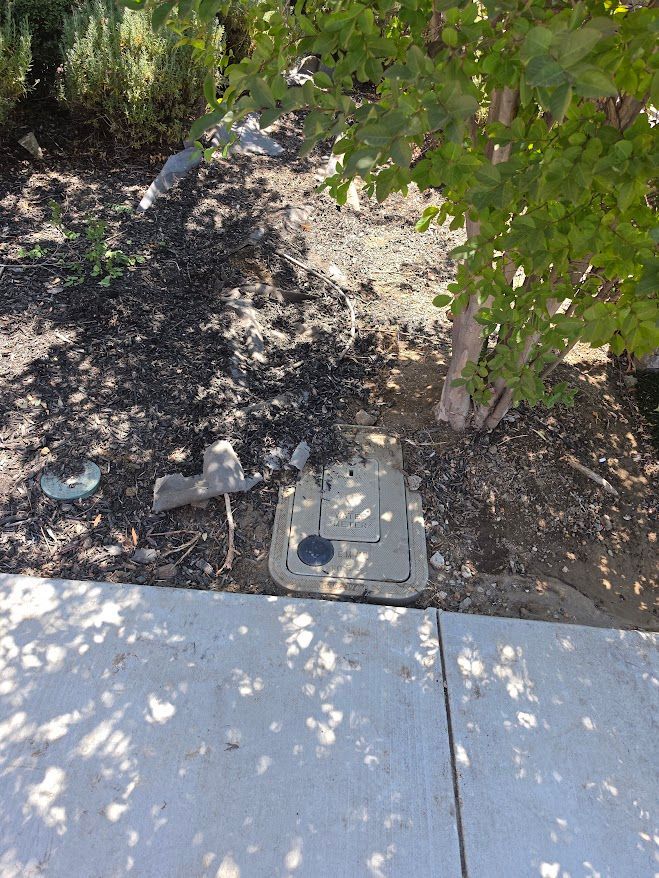
We then shut off household fixtures, irrigation, and other automatic water uses. The water meter still showed continuous flow. Along with the sound inside the wall, that gave us a reason to investigate a supply-line leak rather than assume the washer was leaving water behind.
What the Wall Opening Revealed
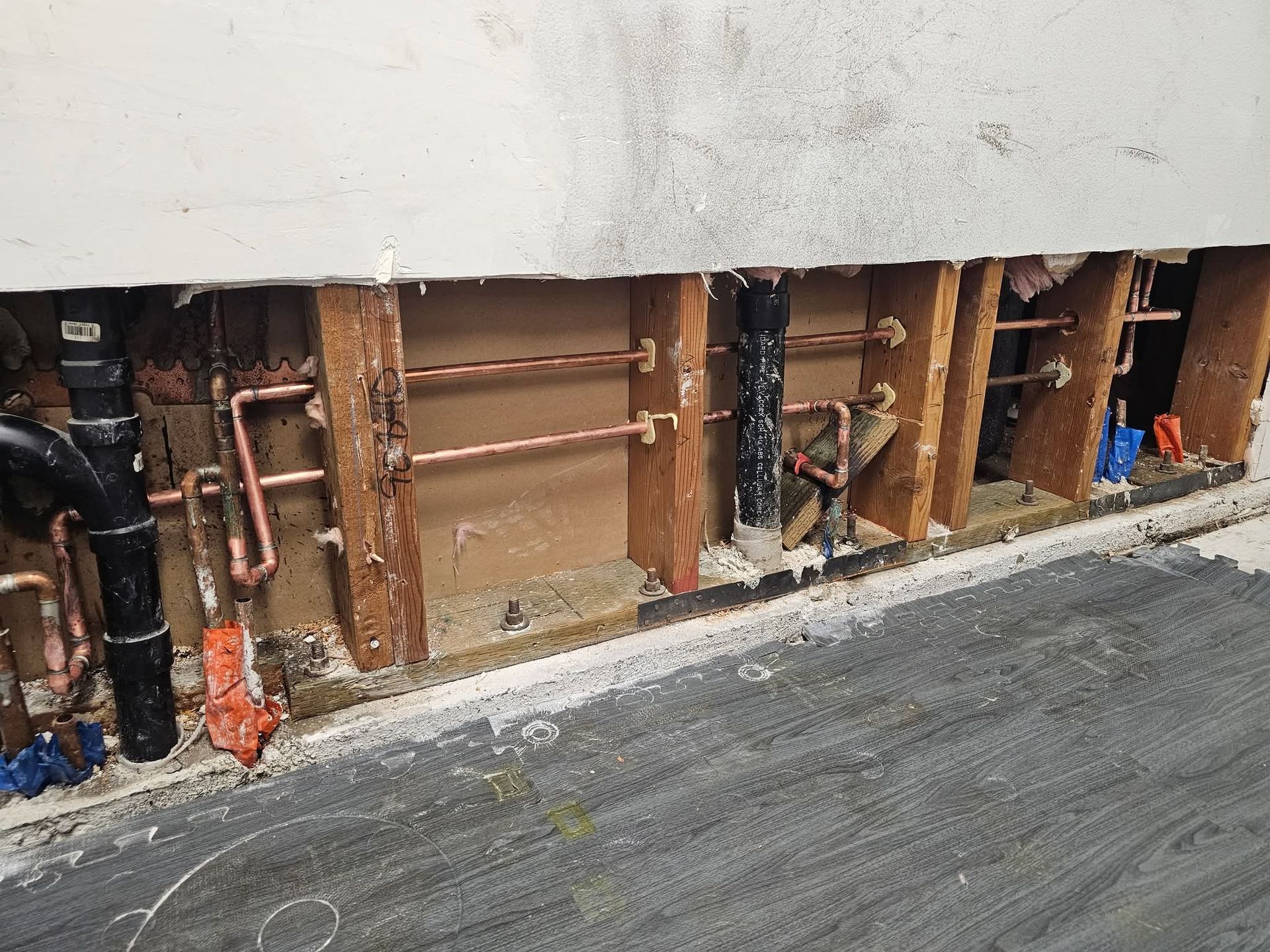
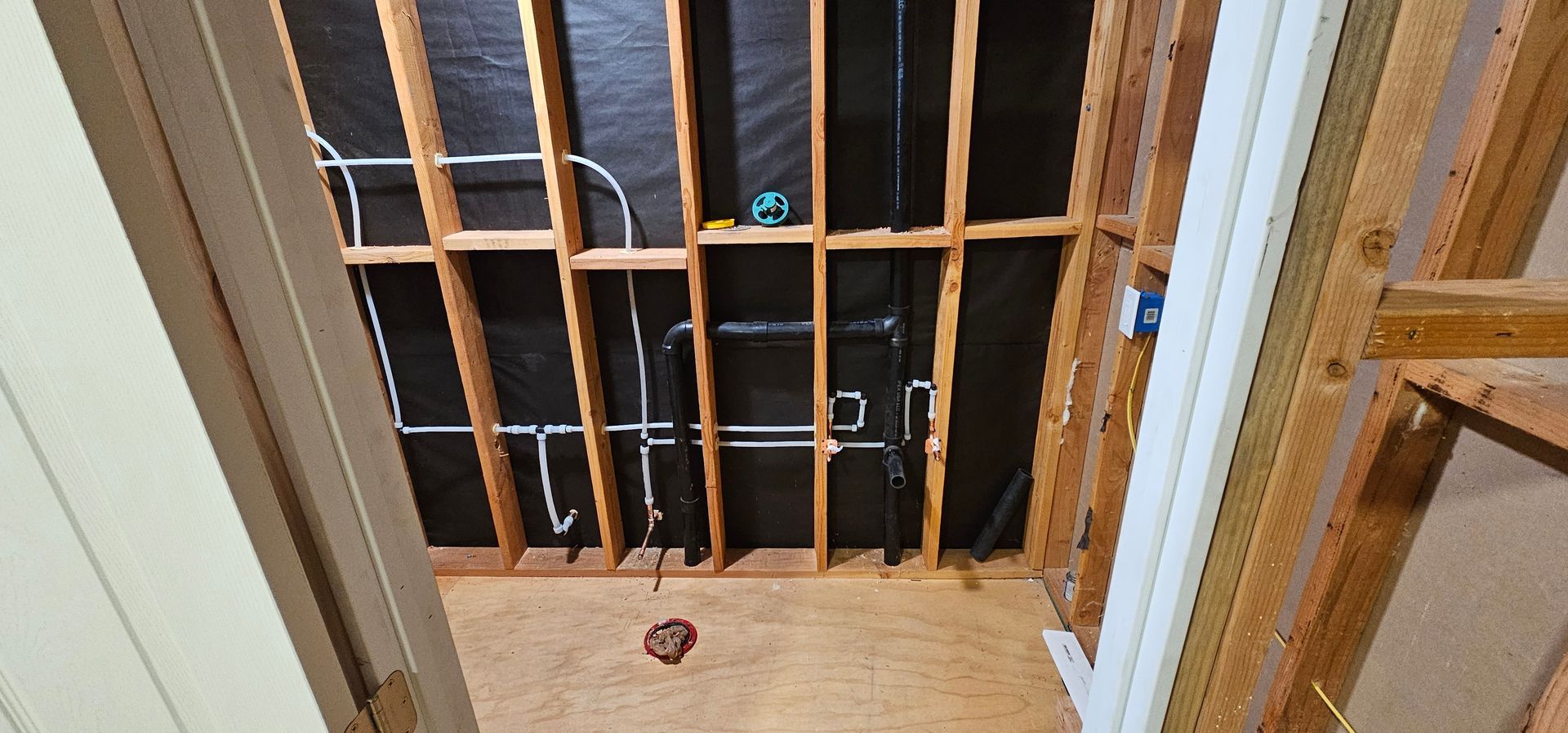
An inspection opening in the laundry room wall exposed the copper distribution piping. The connections we could see were dry, but moisture was coming up around a pipe penetration at the slab. This narrowed the investigation without proving the precise location of the underground failure.
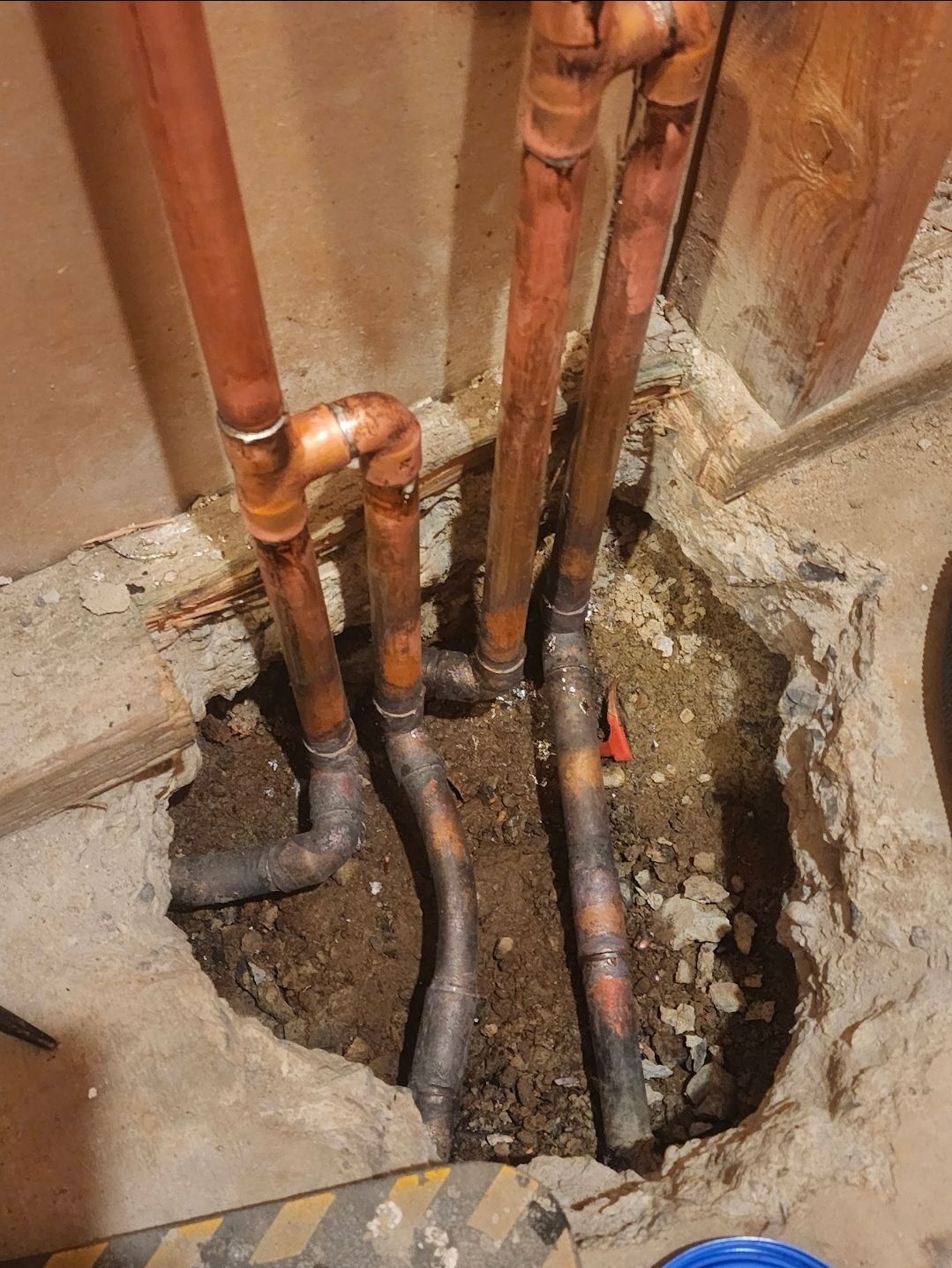
That distinction mattered. Water can travel before it becomes visible, so the wet baseboard did not necessarily mark the point where the copper pipe was damaged. Opening the finished floor at the first visible sign of moisture could have disturbed the homeowner’s new flooring without reaching the failed section.
Isolating the Leaking Cold-Water Branch
We traced the affected cold-water branch between a distribution point in the garage and the laundry room wall. When we temporarily isolated that branch, both the unexplained water-meter movement and the running-water sound stopped.
We also checked what the branch supplied: the washing machine’s cold-water connection, the adjacent powder room’s toilet and sink, and a rear hose bibb. Identifying those fixtures let us plan a replacement route and understand which parts of the home would be affected while the branch was out of service. The rest of the home could remain supplied.
With the leaking branch isolated, the home’s static water pressure measured approximately 65 PSI. Our checks did not identify a pressure-regulator problem, so replacing the regulator was not part of the recommended repair. We also did not assign a specific cause to the underground copper failure because the damaged section was never exposed for inspection.
Choosing Between a Floor Opening and a Reroute
We explained two repair approaches to the homeowner.
One was to locate the underground failure more precisely, open the finished floor and concrete, and repair the damaged section. That would address the identified failure while leaving the rest of the original underground run in service.
The other was to disconnect the leaking run and install a replacement line above the slab. It required an accessible route and drywall openings, but could avoid breaking the slab and disturbing the floor.
The homeowner had recently installed continuous flooring through the hallway and laundry room. After reviewing the available overhead route and the drywall access it required, they chose a targeted reroute. A whole-house repipe was outside the scope of this repair.
Installing the Replacement Cold-Water Line
We installed a new cold-water supply using clear Uponor PEX-A, sized for the connected fixtures and replacement route. The line ran from the garage distribution point through the attic, then down into the laundry room wall. There, it reconnected to the existing above-slab distribution piping.
The installation included supports, insulation, protected penetrations, and copper transitions at the existing connections. We disconnected and capped the leaking underground run at both ends, removing it from the active water system.
This repair replaced one identified leaking branch. The existing hot-water piping and unrelated cold-water branches remained in service, including original under-slab piping outside the repair scope.
Testing the Repair and Restoring Service
Before the access openings were closed, we pressure-tested the replacement piping and inspected its connections. After restoring water service, we checked the washing machine’s cold-water supply, the powder room toilet and sink, and the rear hose bibb.
Finally, with water uses turned off, we checked the meter again. The continuous flow observed before the repair had stopped.
The plumbing work did not require opening the finished floor or breaking the slab. It did require drywall access. The homeowner arranged drying and finish restoration separately. Stopping the leak prevented more water from escaping that line, but it did not immediately remove moisture already present in surrounding materials.
The Result: A Targeted Repair That Preserved the New Flooring
The completed reroute restored service to the affected fixtures and took the leaking underground branch out of use while preserving the homeowner’s continuous flooring.
The key decision came before the new pipe was installed. By checking the washer connections, watching the meter, isolating the branch, and confirming which fixtures it supplied, we could recommend a repair matched to the line that was actually leaking. What first looked like a washing machine problem was resolved with a targeted cold-water reroute.
If moisture keeps returning near your laundry room or you hear water running when no fixture is in use, contact Rodgers Air Conditioning & Plumbing. We can investigate the source, explain what the findings support, and review repair options before you decide where to open your Winchester home.